
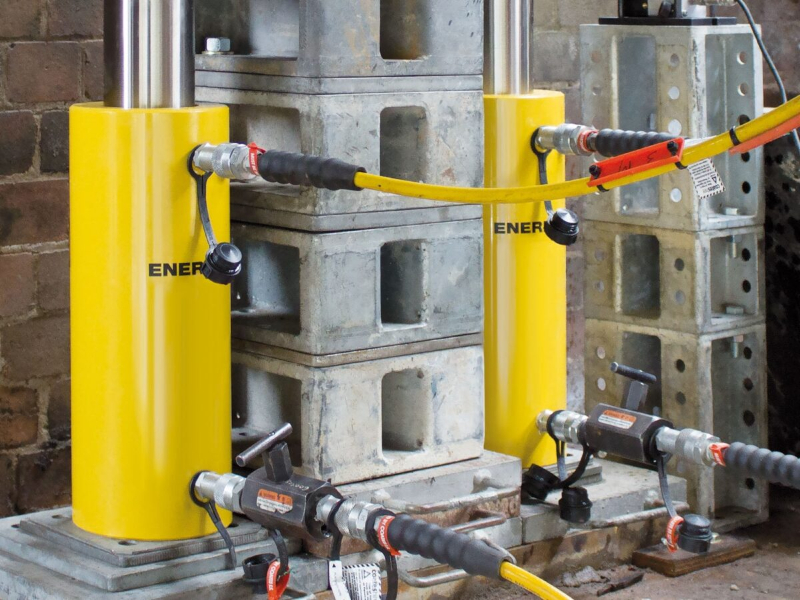
In hydraulic cylinders, safety features are designed to prevent catastrophic failures. A variety of protective mechanisms ensure the safe operation of these features. Engineering designs often include redundant safeguards to address different types of failures that a cylinder may experience during use. Quality units from suppliers https://northernhydraulics.net/hydraulics-shop/hydraulic-cylinders are made with these essential safety elements. They help protect both machinery and personnel from dangerous failure situations.
Rod protection systems
Rod boots or bellows shield exposed rod sections from debris, moisture, and contamination that could damage chrome surfaces or carry abrasives into sealing areas.
- Rod wiper seals remove contamination from rod surfaces before retraction, carrying debris into cylinder interiors, where particles cause internal damage
- Hardened rod surfaces resist impact damage from objects striking exposed rods during equipment operation, preventing stress concentrations that propagate cracks
- Proper rod diameter sizing relative to load ensures adequate bending strength, preventing rod buckling failures under compression loads
- Rod thread designs distribute mounting forces across sufficient material, preventing thread stripping that could allow load release
- Corrosion-resistant rod materials maintain structural integrity in corrosive environments where standard steel would deteriorate progressively
These rod protection features work collectively to prevent the various damage mechanisms that threaten piston rod integrity across different operating environments and application demands.
Seal redundancy design
Multiple seal systems create backup protection where primary seal failure doesn’t immediately cause complete cylinder malfunction, allowing detection and repair before catastrophic failure develops. Primary dynamic seals prevent fluid leakage during normal operation, while secondary seals provide insurance against complete pressure loss if primary seals fail. The layered approach gives operators a warning through visible leakage before complete failure occurs. Buffer seals positioned between primary and secondary sealing elements trap leaked fluid, preventing environmental contamination while maintaining some pressure retention after primary seal degradation. This intermediate protection extends operational capability even with compromised primary seals, allowing continued limited operation during emergencies. The graceful degradation pattern differs from sudden catastrophic failure, providing safer failure modes that will enable controlled shutdown rather than immediate load drop.
Material strength standards
Cylinder barrel materials must meet minimum yield strength specifications, ensuring tubes withstand rated working pressures without permanent deformation that compromises dimensional accuracy.
- Seamless tubing in cylinder barrels eliminates stress concentration points that compromise pressure containment.
- Steel alloy components offer higher strength-to-weight ratios than mild steel components, resulting in lighter components with similar strength.
- Testing of cylinders at greater pressures than their working pressure confirms adequate safety margins
- Documentation of material traceability prevents inferior materials from being substituted during the manufacture of components
- Non-destructive testing can detect internal flaws that can increase crack propagation under cyclic loading, such as voids or inclusions.
Rod protection systems prevent damage from environmental and mechanical sources. Seal redundancy designs provide backup sealing if the main seals fail. Material strength standards make sure the cylinder has enough structural integrity to handle loads safely. Mounting security features stops failures at the attachment points. These safety measures work together to create multiple layers of protection. Single-component failures do not immediately cause a total cylinder malfunction. This allows enough time to detect problems and perform safe repairs. The system ensures operation remains safe even if one part stops working.