
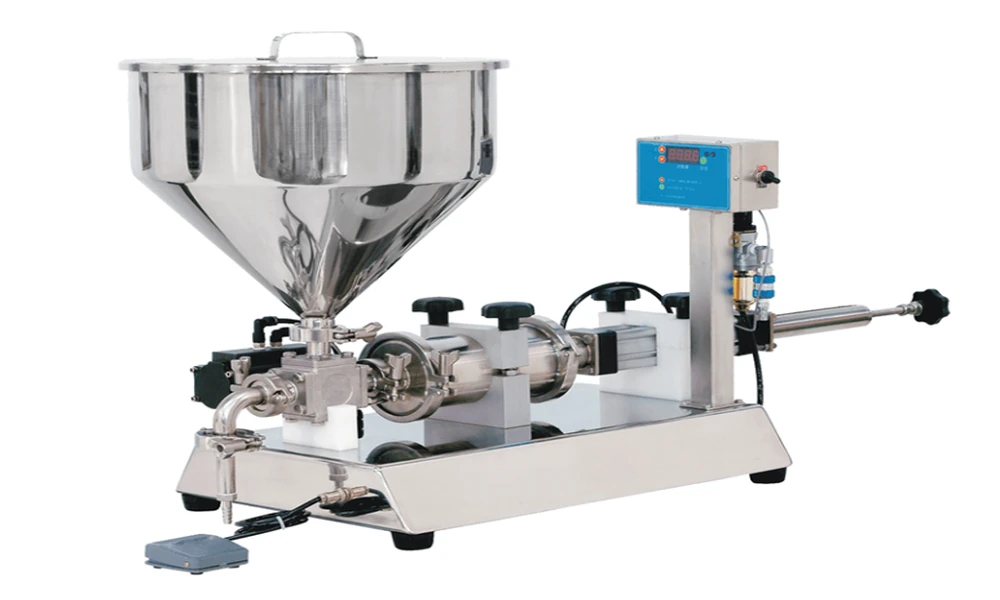
Filling machines and equipment in Singapore support a manufacturing sector that packages everything from high-precision pharmaceutical products to bulk industrial chemicals, from artisan food products to large-volume beverage production. The common goal across all of these applications is packaging efficiency: maximising the throughput of good product into correctly filled, sealed containers at the lowest cost per unit, while maintaining the accuracy, hygiene, and safety standards applicable to the specific product and market.
Defining Packaging Efficiency
Packaging efficiency is not simply about machine speed, though throughput is a component. A more complete definition encompasses:
Fill accuracy: Product that goes into the container in excess of the stated net content is wasted. Product that falls below the stated net content creates regulatory risk and customer dissatisfaction. Filling machines that maintain tight fill accuracy directly improve the economics of the packaging operation.
Changeover time: A filling machine that fills a single product in a single container size efficiently but requires four hours of downtime to changeover to a different product or container is not an efficient solution for a manufacturer with multiple SKUs. Rapid changeover design, with recipe memory, quick-release components, and minimal tool requirements, is an increasingly important efficiency criterion.
Uptime: A machine that runs at 60 cycles per minute when operational but has 20 percent downtime for mechanical issues achieves the same effective throughput as a 48 cycle-per-minute machine running continuously. Equipment reliability directly affects effective throughput and therefore packaging efficiency.
Waste and rework: Filling machines that drip, overfill, underfill, or mishandle containers create downstream waste and rework cost. Equipment designed to minimise these occurrences reduces total packaging cost beyond what the fill rate alone would suggest.
Types of Filling Machines
Filling machines and equipment in Singapore span a range of machine types, each suited to different product types, container formats, and production volumes.
Linear filling machines fill a row of containers simultaneously, advancing the row one position after each fill cycle. They are suited to medium-volume production operations and offer good flexibility for container size changes.
Rotary filling machines fill containers continuously as they move on a rotating carousel through the fill station. They achieve higher throughput rates than linear machines at the same fill cycle time and are suited to high-volume continuous production operations.
Semi-automatic filling machines require an operator to position each container at the fill station and initiate the fill cycle. They are suited to small-volume, high-value products where the investment in full automation is not justified by the production volume.
Fully automatic filling machines handle container infeed, filling, and outfeed without operator intervention in the filling cycle. They maximise throughput and fill consistency and are suited to medium-to-high-volume operations.
Industry-Specific Requirements
Filling machines for Singapore’s diverse packaging industry must address industry-specific requirements that affect both the equipment design and the regulatory compliance of the operation.
Food and beverage filling requires food-contact-certified materials throughout the product pathway, hygienic design that facilitates cleaning and prevents bacterial harbourage, and in some cases CIP (clean-in-place) capability that allows the product pathway to be cleaned without disassembly.
Chemical filling requires materials compatibility with the specific chemicals being filled, corrosion-resistant construction, and in some cases explosion-proof electrical design for flammable products.
Pharmaceutical filling requires the highest standards of documentation, validation, and material certification, with equipment designed to meet Good Manufacturing Practice standards.
As Singapore’s Health Sciences Authority notes in its guidance on pharmaceutical manufacturing, “Equipment qualification and validation documentation is as important as equipment performance in a regulated manufacturing environment.”
Productivity and Labour Efficiency
Singapore’s manufacturing labour market is characterised by both cost and availability constraints. As Senior Minister Tharman Shanmugaratnam has noted in discussions on Singapore’s economic strategy, “Sustained productivity improvement through automation and technology adoption is the only sustainable path to maintaining competitiveness as labour costs rise.”
Filling machine automation in Singapore manufacturing operations directly addresses this challenge. A fully automatic filling line that produces the same output as 6 to 8 manual operators while maintaining better fill accuracy is a productivity investment that pays returns every shift.
Choosing the Right Equipment
Filling machines and equipment for packaging efficiency in Singapore must be selected against specific operational requirements rather than general specifications. The right machine for your operation depends on your product, your container range, your throughput target, your changeover frequency, and your maintenance capability. A specialist supplier with application experience provides the most reliable guidance through this selection process.