
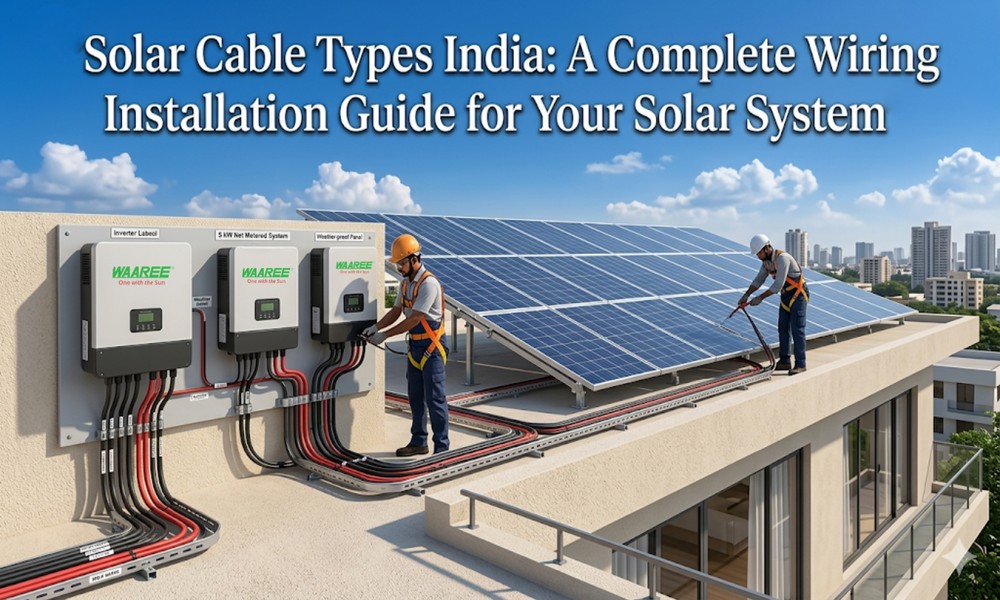
As rooftop and utility scale solar adoption accelerates across India, understanding the components behind a well-functioning solar system becomes equally important. Among all balance of system components, solar cables and wires are the most critical yet most overlooked. Choosing the wrong cable can lead to energy losses, overheating, and serious safety hazards.
What Are Solar Wires and Cables?
Solar wires and cables are electrical components that connect photovoltaic panels to the inverter, battery bank, and electrical panel. Their primary job is to carry DC power generated by the panels to the inverter, which then converts it to AC power for use in homes and businesses. Without properly rated cables, even the most efficient solar panels cannot deliver their full potential.
Why Solar Cable Quality Matters
Poor quality or incorrectly sized cables cause electrical resistance, voltage drop, and in worst cases, fire hazards. In India, solar cable installations must comply with IS 694 standards for PVC insulated cables and Central Electricity Authority (CEA) regulations for grid connected systems. Globally, standards like IEC 62930 specifically govern photovoltaic cables, ensuring UV resistance, temperature tolerance, and long term durability.
Solar Cable Types in India
Solar cable information in India will enable you to make wise purchasing choices. The first type of solar cables that is fundamental is DC cable which will allow electricity from solar panels to flow into the inverter and batteries and will be used to transfer high voltage and high current.
Therefore, ensure that all DC cables are double insulated and UV resistant cables designed for outdoor purposes. AC cables will connect the inverter to the electrical box, guaranteeing a good transfer of energy without interference. PV cables have been specifically designed for connecting solar panels in order to cope with climatic changes.
How to Choose Solar Cables for Home in India
Ensure that there is a proper matching between the volts and amps rating according to your requirement.
Cable runs should be kept short to reduce energy losses due to voltage drops.
Use 2.5 sqmm conductor size per 1000 watts solar power installed.
For India, always use BIS approved UV stabilized double insulated wires which can withstand the elements outdoors.
Final Thoughts
Choosing the right solar cables is as important as choosing the right solar panels. For homeowners and businesses looking for a complete, reliable solar solution, end to end solar systems take the guesswork out of component selection. Waaree Energies, India’s largest solar module manufacturer, offers all-in-one solar kits available in capacities from 3 kW for homes up to 5 MW for commercial clients, including solar modules, inverters, and cables together, simplifying installation for both customers and EPC partners. This is what a truly integrated solar investment looks like, backed by decades of trust and engineering excellence.