
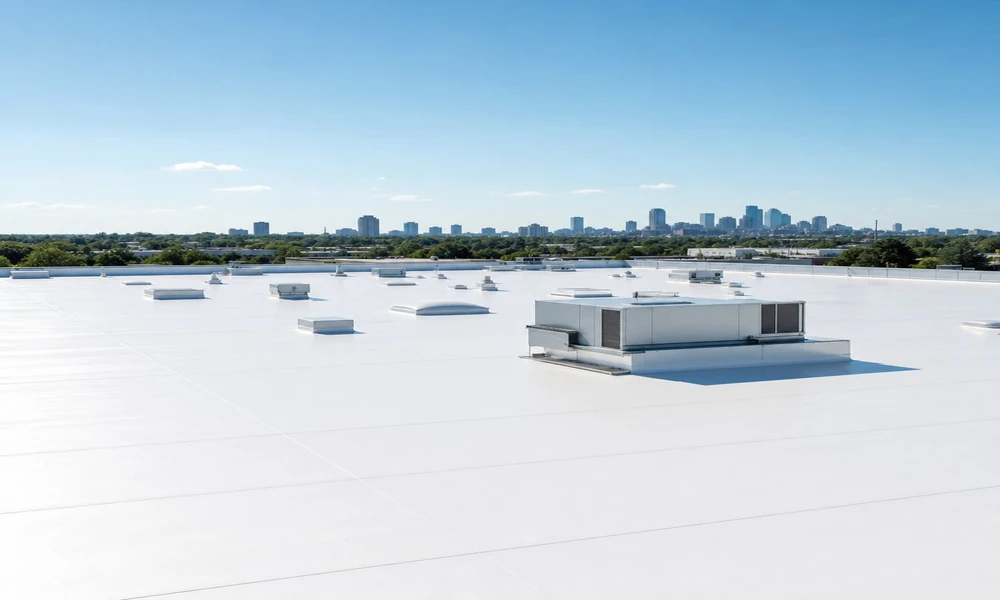
TPO roofing is a top choice for commercial and residential flat or low-slope applications since it combines durability, reflectivity, and affordability with a relatively low price. The majority of TPO roofing is installed on commercial buildings, warehouses, retail centers, apartment complexes and even homes with low-slope roof systems. So, if you’re researching roof systems and comparing roofing material options, you’ll want to learn more about it before you decide.
white TPO roof membrane reflecting sunlight
What is TPO Roofing?
TPO, or thermoplastic polyolefin roofing, is a single-ply roof membrane. What this means is that it’s installed as one layer or sheet over the roof surface as opposed to using shingles or other built-up layers of several membranes.
It is also usually light colored, often white, which helps reflect solar heat (more info) and reduce heat absorption to keep the building cooler during hot months. This bright and clean look is also ideal for roof systems on many structures, as it won’t hide dirt or stains easily.
Why Is It Popular
TPO roofing is often noted for having a good balance of performance and value. It’s also lighter weight than many older roofing systems used on flat roofs, and can be applied efficiently by a professional team when properly trained.
The benefits of TPO roofing are as follows:
- Reflective surface helps reduce heat buildup
- Can resist punctures and tears
- Clean, contemporary appearance
- Performs well on many large roofs
- Heat-welded seams provide better performance
The seam is a crucial area. The individual membranes are usually applied by heat welding, where two overlapping sections of the TPO roofing membrane are heated with a specialized tool which melts them into one another to form a durable connection. However, if the seams aren’t done right, they’ll be the most likely point for leaks to develop, which is why this is one of the more critical aspects of installation when installing TPO roofing systems.
How is TPO Roofing Installed?
Roof preparation is the first step for installation. The area will need to be clean, secure and repaired as needed before the TPO membrane is applied over the existing surface. Some installations may require the removal of existing roofing material from the roof. It may also require the installation of insulation boards or other roof coverings to ensure the roof deck is flat and ready for TPO installation.
Once prepared, the TPO sheet is rolled out and attached to the structure’s roof. It can be mechanically fastened, fully adhered, or ballasted depending on the specific design of the TPO roof system.
Seam welding is an especially vital portion of the installation. Incorrect installation is one of the leading causes of leaking and premature roof failure. If a contractor doesn’t take care to make these seams correctly, the resulting TPO roofing system will likely require frequent repairs or premature roof replacement.
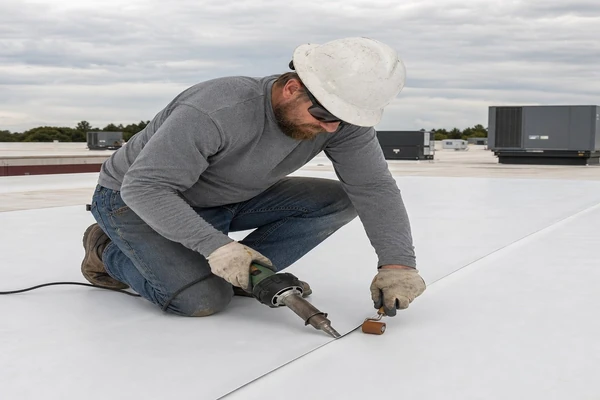
technician heat welding TPO roof seams
Maintaining TPO Roofing and How Long Does it Last?
This kind of roofing can last for many years if installed correctly and regularly maintained, although roof longevity may depend on the membrane thickness, solar exposure, drainage, maintenance practices and other factors.
TPO roof maintenance, and there is a good rundown at nrca.net/homeowners-building-owners, may be relatively straightforward, but it should still not be overlooked. Flat or low-slope roofs can easily accumulate debris and standing water if left uncleaned, which can shorten the life expectancy.
General maintenance may include:
- Sweeping away debris and leaves from roof surface
- Keeping drains and gutters clear
- Checking for holes and loose or failing seams
- Inspecting the roof system after severe storms
- Conducting regular roof inspections by a pro
Proper roof maintenance is one of the easiest ways to catch minor roof problems in time and save money, as repairs are significantly cheaper if caught early.
Is TPO Roofing Good For Your Building?
TPO roofing systems may be an excellent choice for owners looking for an affordable, durable roofing material with the added benefit of reflecting solar heat. Proper drainage and TPO roof slope are the two most important factors to consider when evaluating any roofing system for any building.
Yet, not every roof is suitable for TPO roofing systems. When selecting a new roof, factors such as the building’s roof slope, roof structure, climate, insulation requirements, roof drainage and the extent of foot traffic will be some things you’ll have to think about before deciding on a roof type.
A Smart Way to Approach Your TPO Roofing Project
TPO roofing offers a good mix of longevity, performance and value. If you’ve decided to install this kind of roofing on your commercial property or building, make sure the roof system meets the needs of your specific structure, not just the budget.